


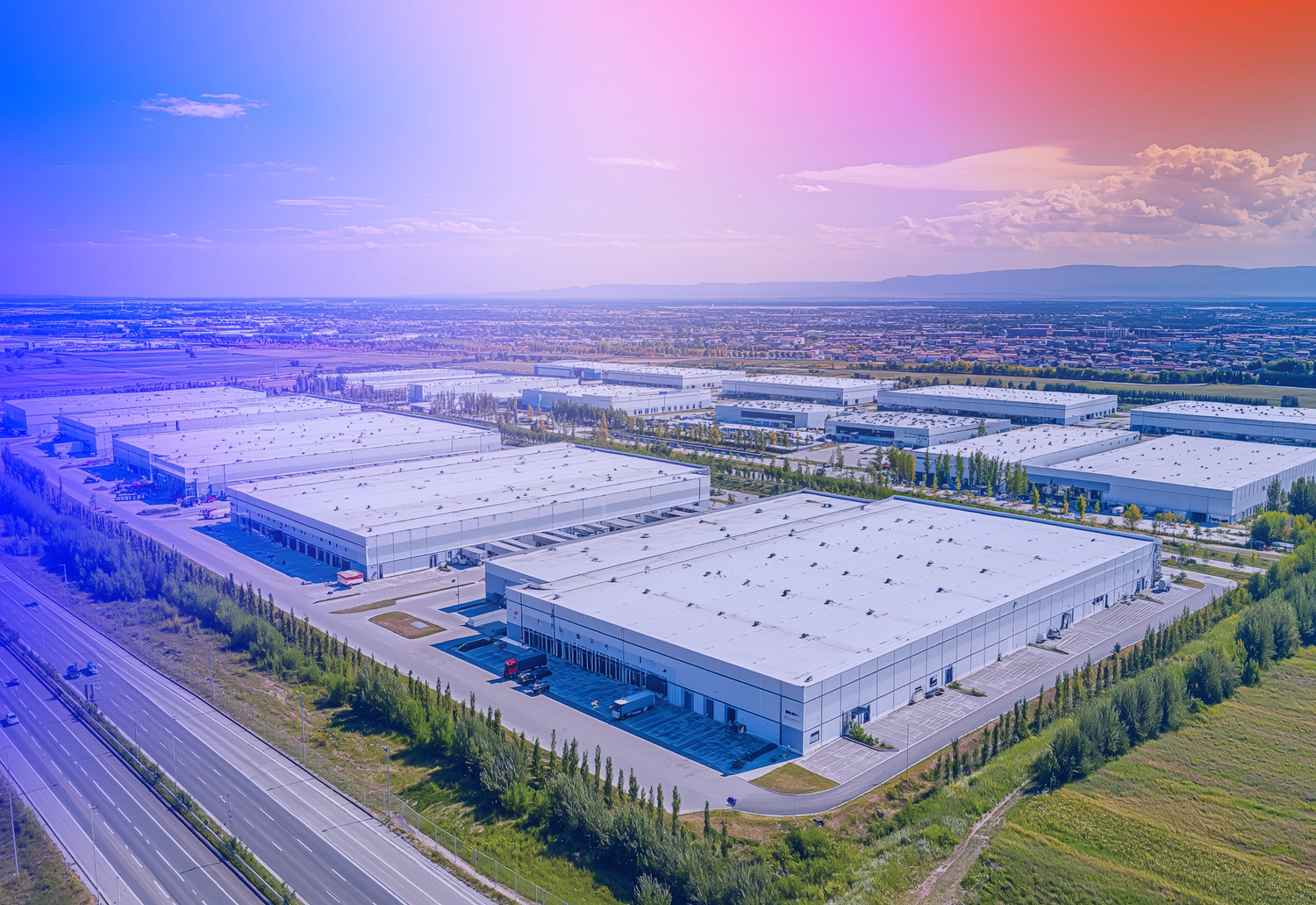
In the space of 18 months, speculative warehousing has gone from guaranteed win to a more considered, less obvious play.
It’s a direct result of a nervous industry, says Frasers Industrial Property general manager NSW Roland Martin.
“There’s a bit of caution on the enquiry side; if you don’t have to take a risk, invest that capex and move to a new building, why would a smaller business do it? Larger groups are more likely to take a punt on it,” Martin says.
But this puts developers between a rock and a hard place. Larger businesses expect higher levels of automation, meaning more expenditure for developers building speculatively, and greater risk.
“As a developer, what rent do you strike the deal at now? Do we put 10 per cent escalation on construction costs? Do we soften the yield by 25 or 50 basis points? It’s a pretty interesting time.”
TMX Transform executive director for property Stefanie Frawley, says the supply chain consultancy is seeing tighter capital discipline across the board from developers, and more scrutiny over speculative developments.
“There is a lower risk appetite. In Brisbane, for example, a lot of that speculative stock has already been absorbed through pre-commitments,” Frawley says.
Prological managing director Peter Jones says that previously, the industrial property world ran on a “build it, and they will come" model.
When B2C exploded, demand surged — driving vacancy rates in Sydney down to 0.25–0.3 per cent. That has since backed off to 3.5–4 per cent: still historically low, but a significant shift as industrial remains off but off the boil.
As a result, speculative completions, which totalled 905,000sq m in the second quarter of 2025, amounting to 38 per cent of all available space, plummeted in the interim — but the drivers behind that volume are declining.
Warehouse automation
A major factor is occupiers’ growing focus on automation and functionality as they take a long-term approach.
“Larger occupiers with more capital are driving automation-led facilities, which is what you’re seeing with a lot of the large-scale developments,” Frawley says.
“Mid-size users are probably a little more cost-focused, they’ve been quite selective on sites but are less driven by automation.”
Developers can’t drop rents further without eroding asset values and their own borrowing capacity, which has led to increased incentives.
As a result, Jones says that it’s become much more of a tenant’s market.
Bespoke facilities command rents of $250–$270 per square metre in Sydney, above the standard $220–$230 mark.
And in seeking to secure the higher-paying tenant in a market which is levelling out, automation impacts the way warehouses are built.
“It affects the way slab is designed, how tall the building is, the ratio of width to breadth on the warehouse, and what the docks need to look like.”
Higher buildings with a smaller footprint are coming into vogue, increasing efficiencies and reducing ongoing opex. But generic spec builds can fall short on slab capability, particularly with point loads, Jones says.
Getting projects over the line
Land constraints across the eastern seaboard makes a smart warehouse play even more critical. And planning systems compound the problem.
“In Sydney, there’s always a shortage of stock because of planning constraints,” Martin says.
“If you look at Mamre Road precinct, everyone’s in various stages of unlocking their estates, in various stages of approvals.
“You look at the map, and assume there must be heaps of product here.
“But when you actually drill into it and consider who can actually build something in the next 12 to 18 months, it really all drops away, it’s probably only a handful of that.”
In fact, Cushman & Wakefield found that while industrial demand was resilient, with 1 million square metres leased in the first quarter of 2026, supply is dropping fast.
The 2026 pipeline is 27 per cent below forecasts last year, with Melbourne and Brisbane approaching five-year supply lows.
The benefits of spec
Speculative warehouses aren’t dead, but they are unlikely to maintain their prior market share and diversification is the safer play, Martin says.
“If you have an estate full of specific, purpose-built facilities, what happens when the customer leaves? Finding a tenant for that specific building is probably going to be a little bit more challenging.
“Really, you want to have a differentiation of sizes. If you’re going to spec 20,000 square meters, you want to be able to split it, you have to have flexibility in your design.
“It’d be pretty ballsy to go and spec 30,000sq m and not be able to split it.”
This is especially the case as, according to Cushman & Wakefield, 68 per cent of deals in the 2026 first quarter were 10,000 square metres.
Jones says that speculatively-built warehousing has a future, just a more sophisticated one.
“There will always be some level of market that just requires a standard warehouse. But a spec built warehouse moving forward will probably be more aligned to some of these more advanced requirements than one built five years ago,” he says.
Martin says that industrial remains the “lifeblood of any economy.”
“Uncertainties feel like they are becoming the new normal, but there will always be demand, there will always be customers that need new space, and there will always be a place for speculative development.”
This article was originally published in The Urban Developer on 14 April 2026.